Investment psychology: Dunning-Kruger Effect and why it matters in investing world
This cognitive bias explains why people with limited knowledge or ability in a specific domain often overestimate their competence, while those who are truly skilled or knowledgeable tend to underestimate their abilities.
Vidyasagar
11/20/20243 min read
Most of the time, people tend to overestimate themselves and their abilities. They believe they are smarter and more capable than they truly are. Individuals with fewer abilities often lack the skills needed to recognize their own lack of knowledge and competency. They exhibit a trait of high confidence. In contrast, those who are knowledgeable.
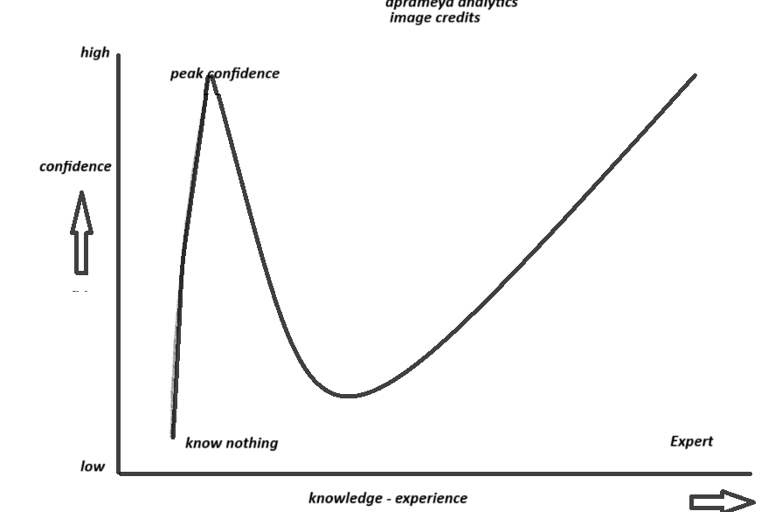
This phenomenon is a well-documented psychological effect known as the Dunning-Kruger Effect, named after psychologists David Dunning and Justin Kruger. This cognitive bias explains why people with limited knowledge or ability in a specific domain often overestimate their competence, while those who are truly skilled or knowledgeable tend to underestimate their abilities.
Most people don’t recognize their incompetency and perform poorly, yet they are unaware of how to judge themselves accurately and fail to learn and grow. This effect has been noted in various fields, including education, corporate settings, finance, sports, and many others.
For instance, in the corporate world, talented individuals often do not receive the promotions they deserve due to their lack of confidence, even though they are worthy and possess more knowledge. Sometimes, higher management relies on these individuals for good performance. On the other hand, people who display a lot of confidence act as if they know everything because they believe they have mastered a subject by acquiring a little knowledge. These individuals may be competent but tend to exaggerate their limited knowledge and skills, often belittling others because of their high confidence.
Why This Discussion Matters:
Discussing this phenomenon is significant when it comes to investment, as investing is largely a psychological endeavour—especially in the stock market, whether through direct stock purchases or mutual funds. There is so much noise out there. When we open any application on our phones, like YouTube or social media ads, we come across content about how some individuals become wealthy by investing in certain stocks or trading options. They often claim that it is easy to make money in the stock market. The market is not a casino; yet, people make speculative trades every day, regardless of whether the market goes up or down throughout the year. Many learn a little about investments or trading through various mediums and then make speculative bets. Given speculation has a 50% probability of success, some individuals win two or three times by chance, leading to inflated confidence. They begin to believe they've figured out how to make easy money quickly and continue in this manner.
After some time, they start trading with higher capital and begin to lose money. Then, they start to learn a little more. When they begin to learn, they realize there is more to it, and their confidence starts to shrink. As they continue to learn more, they realize that investing is not their cup of tea, and they quit. However, a few people continue to learn. As they continue learning, their knowledge increases, and they start to gain more confidence. With this newfound knowledge, they achieve success.
Avoiding Pitfalls: Recognizing the Dunning-Kruger Effect helps individuals avoid overestimating their capabilities, especially in high-stakes fields like finance and corporate management.
Promoting Self-Awareness: By understanding this bias, people can reflect on their own knowledge gaps and seek continuous improvement.
Long-Term Success: In investing and other fields, consistent learning, patience, and humility are often the keys to achieving lasting success.
Practical Advice for Investors:
Start Small: Begin with small investments and focus on learning before increasing capital.
Diversify: Avoid putting all your eggs in one basket to mitigate risk.
Educate Yourself: Learn about the market’s fundamentals and avoid relying solely on social media or anecdotal advice.
Seek Expert Guidance: Consult with financial advisors or credible sources to make informed decisions.
Stay Disciplined: Stick to your investment plan, avoid emotional decisions, and accept that losses are part of the process.
In essence, overcoming the Dunning-Kruger Effect requires humility, a growth mindset, and a commitment to continuous learning.
The Dunning-Kruger Effect highlights the importance of self-awareness and continuous learning in any field, especially in investing, where overconfidence can lead to costly mistakes. By recognizing their own limitations and committing to disciplined learning, individuals can grow their skills, make informed decisions, and achieve long-term success. Ultimately, humility and perseverance are key to mastering both knowledge and strategy.